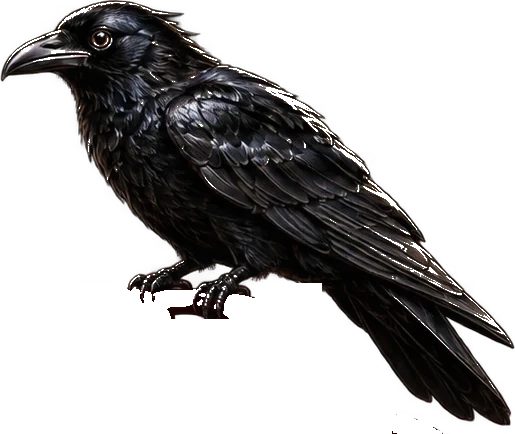
Why does the raven sit on a bust of Pallas?
The bust places the raven above the speaker’s chamber door, making the bird a persistent visual presence throughout the exchange. Pallas refers to Athena, associated with wisdom. A dark bird resting on a pale sculpted head also gives the scene a striking contrast of color, texture, and movement.
In The Philosophy of Composition, Poe discusses the bust as a choice suited to the speaker’s learned setting and to the effect of the scene. The essay is useful because it ties an apparently decorative object to the poem’s construction rather than treating it as an accidental prop.
Readers may also interpret the image as a tension between reason and grief: the speaker’s books and emblem of wisdom cannot keep his questions from becoming desperate. That symbolic reading is persuasive, but it is still an interpretation, not a hidden meaning that every reader must accept. Begin with what the poem physically shows, then ask how the positioning changes the speaker’s relationship to the visitor. The final shadow matters because the bird has become more than a temporary interruption.
Sources and further reading
Editorial answer from Ask Poe. Interpretive readings are distinguished from documented publication facts. Check the linked texts and editions.